

Paul Whiting
yacht designer (1952–1980)
Paul Whiting was born in 1952 in New Zealand, into a family deeply rooted in sailing and nautical culture. His father, D’arcy Whiting, was a multifaceted figure and sailing enthusiast, involved in racing boats and artistic pursuits such as sculpture and painting.
His sister, Penny Whiting, was an avid sailor and sailing instructor, actively participating in New Zealand's sailing culture.
He does not appear to have attended formal naval design schools; in fact, he was a self-taught designer, learning on the job from a very young age.
Paul Whiting was an innovative and talented sailing boat designer, considered one of the brilliant protagonists of the IOR (International Offshore Rule) scene in the 1970s and early 1980s.
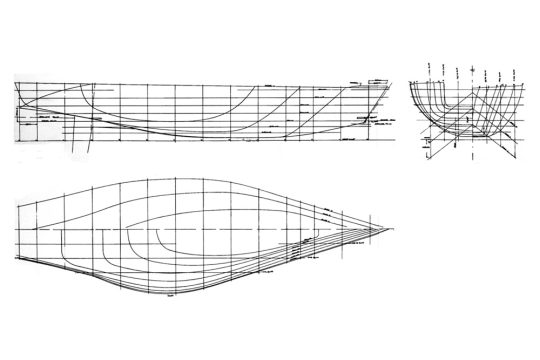
His influence profoundly transformed offshore racing boat design, with models that were lighter, faster, and more radical than traditional designs.
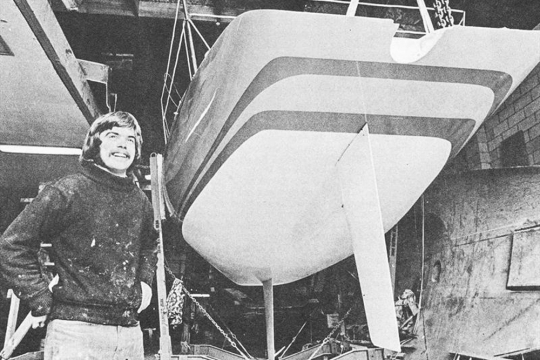
At just 16, Paul designed his first boat, the Reactor 25, a small JOG (Junior Offshore Group) keelboat that quickly conquered the market with over 70 units produced by the shipyard he founded. This marked the beginning of his career as a designer, known for lightweight and efficient boats.
Paul later designed a 46-footer, named Tequila, for his father. This moderate-displacement offshore racing boat would have been more successful had D'arcy Whiting not envisioned a world cruise and subsequent interior design (including a fully equipped workshop). Tequila is the precursor to the Reactor 45, a fiberglass development of the Tequila line.
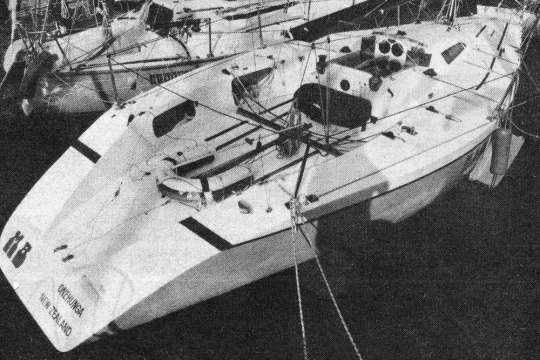
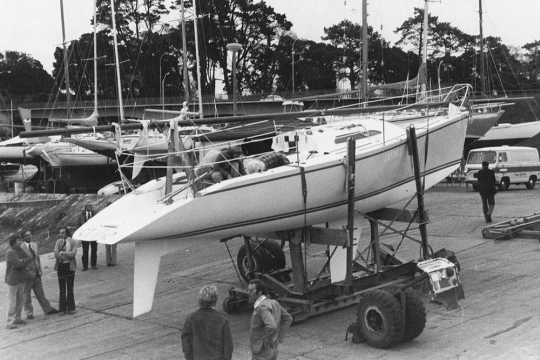
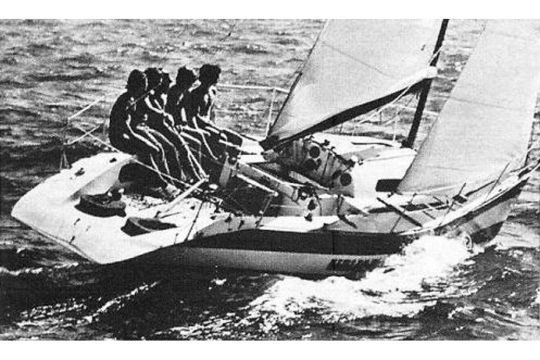
During the 1970s, Whiting designed some of the most innovative and successful racing boats. His most famous models are the quarter-tonner Magic Bus (winner of the 1976 Quarter-Tonner Cup in Corpus Christi, Texas), designed in collaboration with sailor Murray Ross. Magic Bus is known for its lightness, innovative hull shape, and ability to excel in light-wind conditions.
Other notable designs include:
Stinger: A successful half-tonner that won the 1974 Auckland-Gisborne race.
Candù: A half-tonner that achieved good placings in European competitions.
Newspaper Taxi: A highly competitive half-tonner.
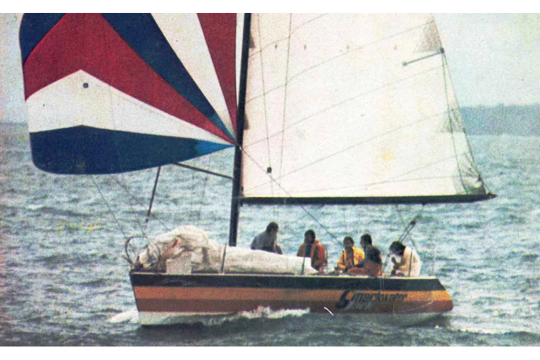
Smackwater Jack: An innovative one-tonner from 1977, tragically famous for being Whiting's last boat, which he sailed at sea.
Whiting is part of a new generation of New Zealand designers who revolutionized offshore design, along with Bruce Farr and Laurie Davidson. His boats combine the concepts of lightness, speed, and maneuverability, anticipating many modern trends in racing sailing.
In 1980, Paul Whiting tragically lost his life at sea during the return voyage to New Zealand from the Sydney-Hobart route aboard Smackwater Jack. The boat and crew disappeared in a storm without immediate trace, with a piece of the rudder only being found years later on the coast of New Zealand.
Paul Whiting is remembered as a sailing yacht design genius whose work left an indelible mark on the world of offshore sailing. His ideas and designs continue to influence yacht designers worldwide, and he remains central to the history of New Zealand and international sailing.
His career, though short, was rich in inventiveness and success, placing him among the great innovators of his time, alongside figures such as Bruce Farr.
This information is drawn from historical sources and in-depth articles published over the years, including tributes and analyses of his work at the Ponsonby Cruising Club, and biographical details published in specialist platforms and sailing newspapers.