


Attila, Kartell
Attila, Kartell (2000)
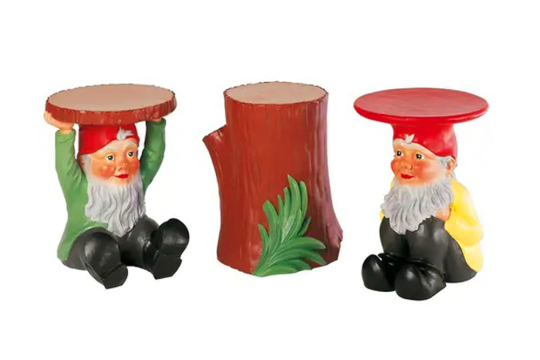
Attila is a stool-coffee table designed by Philippe Starck for Kartell in 2000, known for its originality and unconventionality. It is part of a collection that also includes the Napoleon and Saint-Esprit models.
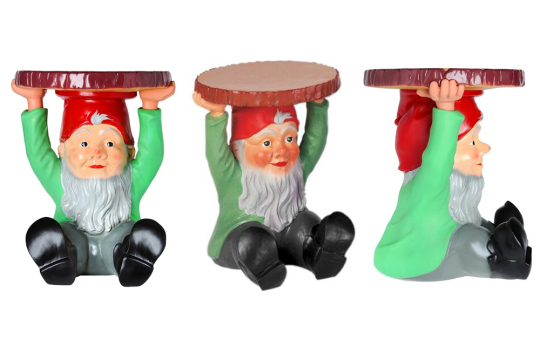
Attila is shaped like a gnome, with a flat, circular hat that serves as a tabletop or functional seat.
Attila, Napoleon, and Saint-Esprit are three stool-coffee tables, three charismatic characters that stand out for their originality and unconventionality. These stools and tables are designed to furnish any space without preconceptions, with charm and humor, but also with an eye for functionality: the gnomes' hats, in fact, are flat and circular, specifically designed to be used as a tabletop or stool.
Philippe Starck's original idea was to create an object that brings surprise and irony, breaking with convention and introducing a positive shock to design. Attila is conceived as a character, a garden gnome, who enters interior spaces with a provocative and playful tone, bringing fairytale and legendary imagery into the home. Starck wanted an object that was functional but, above all, capable of communicating and offering a new perspective, challenging the ordinary and giving the object symbolic and cultural value.
Starck has often emphasized the importance of looking at things from a different perspective, of not being afraid of imperfection, and of creating products that improve lives through creative innovation. In this sense, Attila is more than a stool or coffee table: it is a symbol of surprise and originality, designed to stimulate curiosity and break the mold of established interior design.
Philippe Starck designed Attila as an ironic, playful, and functional object, intended to bring a provocative and playful tone to the spaces in which it is placed. Designed for the Saint Martin's Lane Hotel in London, it contributes character and personality to the interior spaces. Its shape resembles a garden gnome, evoking fairytales and legends that enter the home.
Attila is made of painted thermoplastic technopolymer, making it lightweight and easy to move. The plastic material is a functional choice that allows for a durable and colorful product, while maintaining a high aesthetic value and respect for Kartell's innovative philosophy, which focuses on bold and accessible products.
Attila measures approximately 41 cm in height, with a seat or top diameter of 34-40 cm, making it suitable both as a stool and as a side table.
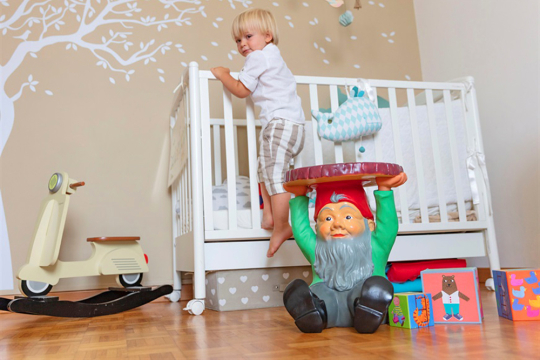
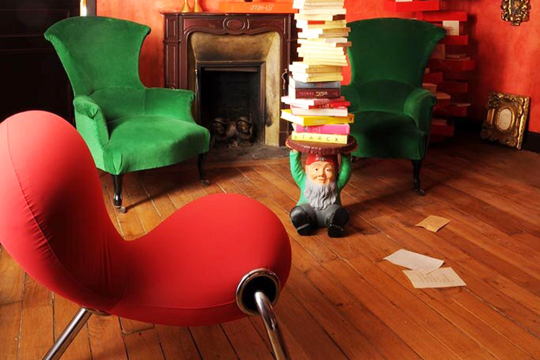
Attila can be used in a variety of furnishing contexts: as a stool in a domestic or public space, as a side table in living rooms or relaxation areas, or as a distinctive decorative element. Its versatility and playful approach make it a focal point in both contemporary and more informal settings.
Attila has been hailed as a cult design object, combining functionality and charm with a strong symbolic and playful charge. Critics praise its effective combination of aesthetics and everyday use, praising Philippe Starck's ability to lightly convey a shared imagery through modern, accessible shapes and materials.
"Attila is a small guardian of space, a character who enters our homes with irony and a touch of magic" (from a critical analysis of Starck's design).
"Kartell, with Philippe Starck, has transformed a simple everyday object into a cultural and stylistic icon" (comment from industrial design experts).
Attila presents itself as an emblematic example of Philippe Starck's ability to blend functionality, aesthetics, and narrative, creating an object that is both a furnishing accessory and a character with its own symbolic universe.