A Brief History of Design
from the early 1800s to the 2000s
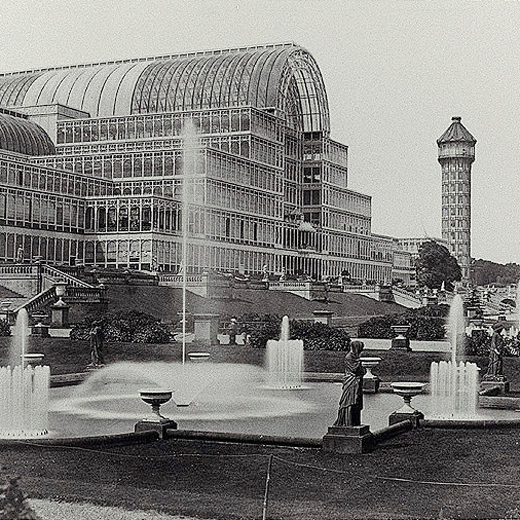
The Industrial Revolution and the Origins of Design (late 18th – mid 19th century)
The Industrial Revolution, which began in Great Britain in the second half of the 18th century, marked the birth of modern design. The introduction of machinery such as the mechanical loom and the steam engine allowed the mass production of objects, making design accessible to a wider audience. Key figures in this phase were Josiah Wedgwood, a pioneer in industrial ceramics, and Michael Thonet, inventor of the famous bentwood chairs.
The Great Exhibition in London in 1851, hosted in Joseph Paxton's Crystal Palace, consecrated the industrial product and the figure of the specialized designer for industry.
From Art Nouveau to Art Deco (late 19th – early 20th century)
At the turn of the 19th and 20th centuries, Art Nouveau broke with academic tradition, proposing forms inspired by nature and a close integration between art and industry.
Among the protagonists were Hector Guimard and Charles Rennie Mackintosh. In the 1920s and 1930s, Art Deco emerged, characterized by geometric lines and innovative materials, such as glass and metal, with prominent figures such as Émile-Jacques Ruhlmann and René Lalique.
The Bauhaus and Modernism (1919-1933)
With the foundation of the Bauhaus by Walter Gropius in Germany, design established itself as an autonomous discipline, based on the integration of art, technology and industrial production. Marcel Breuer, with his tubular metal chairs, and Ludwig Mies van der Rohe were among the protagonists of this revolution. The Bauhaus profoundly influenced the Modern Movement, which spread throughout Europe and the United States, with Le Corbusier and his rational and functional approach to architecture and design.
The Post-War Period and the Italian Design Boom (1950s-1960s)
In the post-war period, design became a symbol of reconstruction and progress. In Italy, the “made in Italy” movement was born with figures such as Gio Ponti, Achille and Pier Giacomo Castiglioni, Marco Zanuso and Ettore Sottsass, who brought innovation to both materials and shapes. At the same time, in the United States, Charles and Ray Eames revolutionized furniture with the use of plastic and curved plywood.
Postmodernism and globalization (1970s-1990s)
In the 1970s and 1980s, design opened up to new cultural and linguistic contaminations. The Memphis group, founded by Ettore Sottsass, broke with modernist rigor by proposing bright colors and playful shapes. In these decades, designers such as Philippe Starck also emerged, who interpreted design as an ironic and provocative experience.
Digital design and the contemporary era (2000s)
With the advent of digital, design changed profoundly.
The 2000s saw the birth of social media, smart cities, wearable devices and the Internet of Things.
Designers such as Marc Newson and Stefan Sagmeister become key figures, contributing to iconic projects such as the iPod, iPhone, Apple Watch and Nintendo Wii. Design, now central to everyday life, merges with technology and innovation, becoming a strategic lever for companies and society.
This overview traces the main historical passages and the protagonists who have marked the evolution of design from the 19th century to the 2000s, highlighting how design has gone from being an artisanal discipline to a driver of social, cultural and technological innovation.