

Isamu Noguchi
artist - designer (1904 - 1988)
Isamu Noguchi, a Japanese-American sculptor, designer, and artist, considered one of the most important and innovative figures of the 20th century, was born in Los Angeles on November 17, 1904. He lived a life dedicated to artistic experimentation and the fusion of East and West, with a strong interest in materials and space.
Noguchi, the son of Japanese poet Yone Noguchi and American writer Leonie Gilmour, grew up in a multicultural environment and studied sculpture with the great Constantin Brancusi in Paris. His experience in Japan deepened his understanding of the tradition of the Zen garden and arts such as Ikebana, profoundly influencing his work. He traveled and worked throughout the world, absorbing and blending diverse artistic sensibilities.
His work ranges from monumental sculpture to public gardens, from furniture to lamps, and even theater sets. He is renowned for his ability to combine the purity of geometric and organic forms with a profound exploration of space and materiality.
Noguchi collaborated with architects and institutions on numerous projects for public spaces, museums, and gardens, as well as with design manufacturers. Among his best-known industrial design works are his Akari lamps, produced for both indoor and outdoor use, which have become icons of global design. Although not associated with many commercial companies in the traditional sense, his objects and lamps are produced and distributed through various collaborations, including the Noguchi Museum, founded in 1985 on Long Island, New York.
Designed products, companies, and dates by Isamu Noguchi:
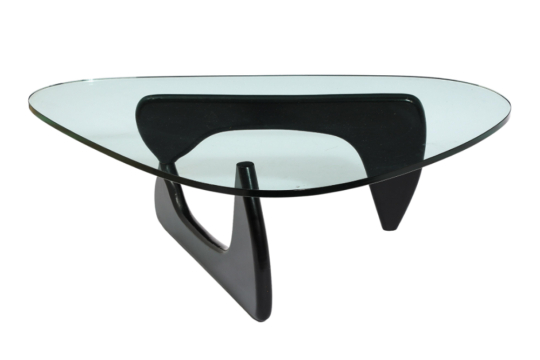
Coffee Table (1947), Herman Miller Furniture Company, Vitra Design Museum since 2002.
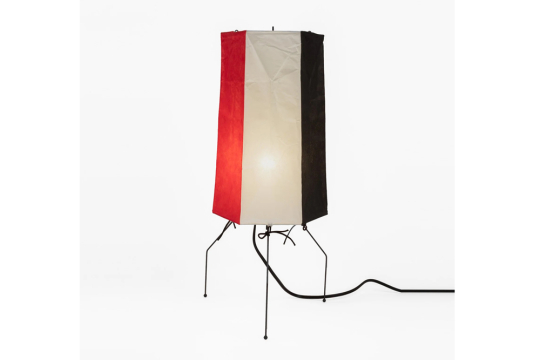
Akari Light Sculptures (since 1951), produced in Gifu, Japan.
Bamboo Basket Chair (1950s), collaboration with: Isamu Kenmochi.
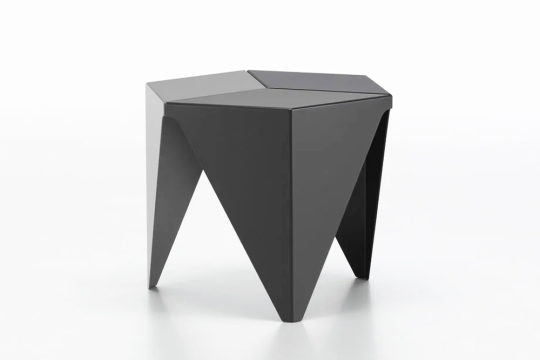
Prismatic Table (1950s), Alcoa (aluminum)
Cyclone Table (1953), Vitra Design Museum (later in production)
Lunar Sculptures (1940s), self-illuminated magnesite sculptures containing light bulbs.
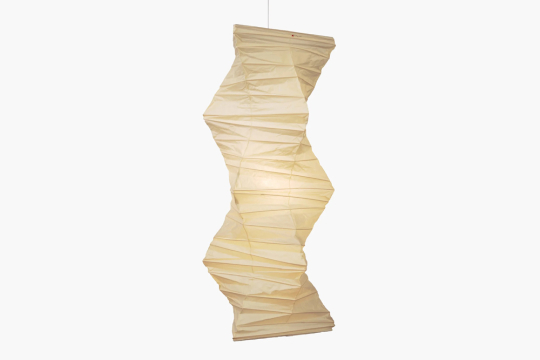
Folded Paper Lights (Akari Lamps), several versions (1950s-1960s), organic forms.
Some of his best-known works and artistic projects include:
History of Mexico (1936): large concrete mural in Mexico City.
Akari Light Sculptures (from 1951): lamps made of Japanese rice paper (washi), bamboo, and metal wire.
Garden of Peace (1956-1958): designed for the UNESCO headquarters in Paris.
Octetra (1968): modular sculpture in red concrete, both a game and a work of art, exhibited in Spoleto.
Monument to Benjamin Franklin (1984-1986): monumental bronze sculpture.
Noguchi's work is characterized by his innovative use of materials such as marble, bronze, iron, steel, stone, wood, bamboo, and washi paper. His artistic language blends biomorphic and geometric forms, expressing the unity of art, nature, and space.
Isamu Noguchi was also a set designer, collaborating with the Martha Graham Dance Company on theatrical sets.
Honors and Awards:
First Prize from the Art Institute of Chicago (1959).
Honorary degrees (Indiana University, USC Los Angeles).
Membership of various art academies.
The Noguchi Museum opened in 1985.
The Third Order of the Sacred Treasure was awarded to him by the Japanese government in 1988.
Noguchi left an artistic legacy spanning sculpture, design, and architecture, creating a cultural and formal bridge between East and West and promoting an integrated vision of art in everyday life.